


Why Polarized Lenses Block Glare: The Physics Made Simple (Cali Life Co.)
TL;DR: Polarized lenses block glare because of how light bounces off horizontal surfaces. Sunlight in nature has light waves vibrating in all directions. When sunlight reflects off water, snow, wet pavement, or glass, the reflected light waves end up vibrating mostly horizontally. A polarized lens has a vertical filter inside it that allows vertical light waves to pass through and blocks horizontal ones. The reflected glare gets blocked, the natural scene comes through. That is the whole mechanism. The result is dramatic visibility improvement on water, snow, wet roads, and any reflective horizontal surface. Every Cali Life Co. lens uses TAC polarized construction, which embeds the polarization film between protective layers for durability that lasts the life of the lens.
This is one of those small technical details that, once understood, makes the world make a little more sense.
The basic physics
Light is a wave. Like water waves, light waves can vibrate in different directions. In direct sunlight, light waves vibrate in all directions at once. This is called "unpolarized" light.
When light hits a flat horizontal surface (water, asphalt, glass, snow, sand), something interesting happens. The vertical components of the light get absorbed or refracted into the surface. The horizontal components get reflected away.
The reflected light is now mostly horizontal. This concentrated horizontal light is what we experience as glare.
A polarized lens has a microscopic vertical filter built into it. Light vibrating vertically passes through the filter. Light vibrating horizontally is blocked. Since glare is mostly horizontal, polarized lenses block it.
That is the whole story.
Why this matters in real life
Five everyday situations where polarization changes what you see.
Water surface. Without polarization, the surface looks like a bright mirror. With polarization, the water looks transparent. You can see fish, rocks, and the bottom.
Wet pavement. Without polarization, the road looks white-glare and lane markings disappear. With polarization, the road looks gray and lane markings are clearly visible.
Snow. Without polarization, snow becomes painfully bright and contrast disappears. With polarization, snow looks normal-bright with full contrast.
Glass and windshields. Without polarization, sun-bounce off glass momentarily blinds you. With polarization, the bounce is dramatically reduced.
Sand and concrete. Without polarization, summer sun off sand creates a white shimmer. With polarization, the shimmer is gone.
The American Optometric Association confirms the visibility improvement and recommends polarized lenses for water sports, fishing, driving, and snow activities.
How the filter actually works
A polarized lens has a thin film inside it. The film is made of a polymer that has been stretched, which aligns the molecules in long parallel chains. Iodine ions are added to the chains to absorb light along the chain axis.
The result is a microscopic grid of vertical lines (when the lens is oriented correctly). Light waves vibrating perpendicular to these lines (vertical) slip through the spaces. Light waves vibrating parallel to these lines (horizontal) get absorbed.
This is why polarized lenses work and how they are different from regular tinted lenses. Regular tints reduce overall brightness uniformly. Polarized films selectively block one direction of light vibration.
Why TAC polarized is the standard for quality
TAC stands for triacetate cellulose. TAC polarized lenses are built in a specific multi-layer construction.
1. Top hard coat. Scratch-resistant outer layer. 2. Outer TAC layer. Triacetate cellulose protective film. 3. Polarization film. The vertically-aligned polymer that does the work. 4. UV blocker layer. UV400-spec material. 5. Inner TAC layer. Triacetate cellulose protective film.
The key is that the polarization film is sandwiched between protective layers. This means the polarization is a structural feature of the lens, not a coating on the surface that can wear off.
Cheaper polarized lenses sometimes apply polarization as a coating on top of a standard lens. These coatings can wear off or peel after months to years of cleaning and exposure. TAC polarized lenses do not have this problem because the polarization is embedded.
What polarization does not do
A few common misunderstandings.
It does not block UV. UV protection is a separate spec. A lens can be polarized without being UV400. Cali Life Co. lenses are both, but in the broader market the two specs are independent. The full breakdown lives at difference between UV400 and polarized.
It does not work for all glare. Polarization specifically blocks horizontally-polarized light. Glare from non-horizontal surfaces (overhead sun, vertical light sources, certain LCD screens) is not blocked.
It does not improve color rendering. Color comes from the lens tint. Polarization is colorless on its own. A gray polarized lens shows true color. A brown polarized lens warms the scene. A blue mirror polarized lens cools it.
It does not provide impact protection. Lens toughness is a separate property. TAC polarized lenses do have multi-layer structural integrity, but polarization itself is not a safety spec.
Why polarized lenses sometimes show rainbow patterns
Some polarized lens wearers notice rainbow color patterns when looking at LCD screens, car windshields, or some glass surfaces. This is called birefringence and is normal.
Birefringence happens when the protective layers of the lens are slightly stressed during manufacturing. Light passing through stressed plastic separates into different colors at different polarization angles. The rainbow pattern is most visible on already-polarized light sources (LCD screens, polarized car windshields).
It does not affect lens performance. It is sometimes considered a sign of a real polarized lens, since non-polarized lenses do not show the pattern at all.
How to verify polarization yourself
The full guide lives at how to test if sunglasses are actually polarized. The short version: hold the lens against a phone screen and rotate it 90 degrees. A real polarized lens will go dark or show rainbow patterns. A non-polarized lens will look the same at every angle.
The Cali Life Co. lens spec
Every frame ships with the same lens construction.
- TAC polarized UV400 lens, five-layer build
- Hard scratch-resistant top coat
- Polarization film embedded between TAC protective layers
- UV400 blocker layer for full UV protection
- Available in gray, brown, mirrored gold, mirrored pink, mirrored blue tints
The construction is consistent across the catalog. Wood frames, acetate frames, combination frames, all share the same lens spec.
FAQ
Why do polarized lenses reduce glare?
Polarized lenses contain a vertical filter that blocks horizontally-vibrating light. Since glare from horizontal surfaces (water, snow, wet roads) is mostly horizontal light, polarized lenses block it while letting natural scene light through.
How does light become polarized?
Light becomes polarized when it reflects off a horizontal surface. The vertical components are absorbed into the surface, the horizontal components are reflected away. The reflected light is what we experience as glare.
What is the polarization film made of?
A stretched polymer with aligned molecular chains, treated with iodine ions to absorb light along one axis. The film is then sandwiched between protective layers in a TAC polarized lens.
Why do polarized lenses sometimes show rainbow patterns?
Birefringence in the protective layers causes light to separate into colors at different polarization angles. This is normal and does not affect lens performance.
Do polarized lenses work in all conditions?
They work for glare from horizontal surfaces. They are less effective for glare from non-horizontal surfaces or for direct overhead sun. For most outdoor scenarios, the benefit is dramatic.
Are polarized lenses better than just dark tinted lenses?
For glare conditions, yes. Tinted lenses reduce overall brightness uniformly. Polarized lenses selectively block reflective glare while preserving the natural scene.
Does polarization wear off over time?
Not on TAC polarized lenses where the film is embedded between protective layers. Cheap polarized coatings (applied on top of a standard lens) can wear off, but proper TAC construction lasts the life of the lens.
Are all Cali Life Co. lenses polarized?
Yes. Every lens is TAC polarized UV400 across the entire catalog.
Bottom line
Polarized lenses block glare by filtering out horizontally-oriented reflected light. The mechanism is simple physics, the result is dramatic visibility improvement on water, snow, wet roads, and any reflective horizontal surface. Cali Life Co. uses TAC polarized construction with the polarization film embedded between protective layers for durability. Browse the polarized wood sunglasses collection, or read how to test if sunglasses are actually polarized to verify any polarized lens.
Related posts
- How to test if sunglasses are actually polarized
- Difference between UV400 and polarized
- Polarized sunglasses for fishing
---
Cali Life Co. handcrafts polarized wood sunglasses in San Diego, California. Every pair is backed by a lifetime warranty.
Shop polarized UV400 frames

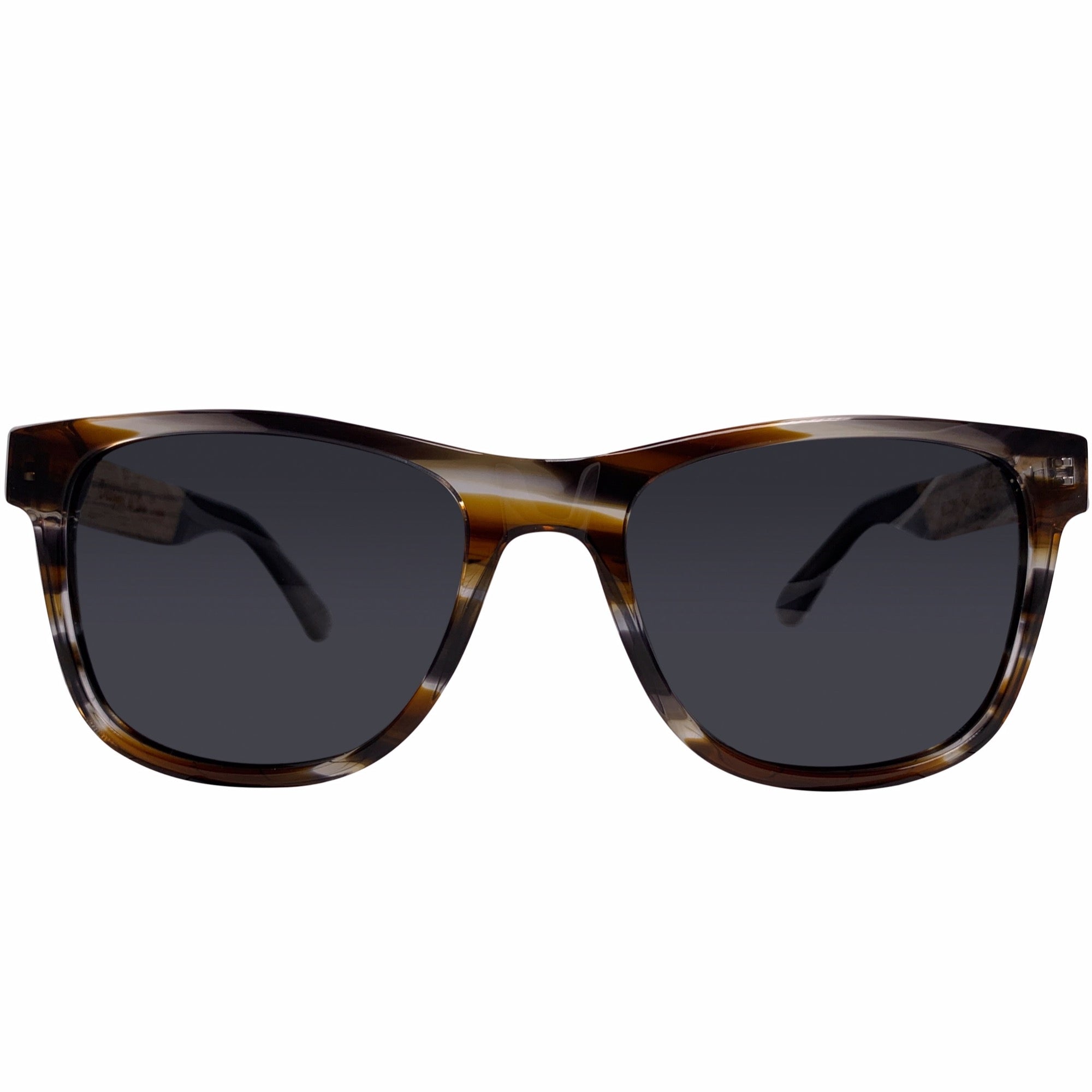

Polarized UV400 - real wood and bamboo - lifetime warranty - designed in California.