


Polarized Sunglasses for Fishing: The Lens That Lets You See Into the Water (Cali Life Co.)
TL;DR: Polarized sunglasses are essential gear for fishing. They eliminate the surface glare that turns rivers, lakes, and bays into white mirrors at the wrong sun angle. With polarization, you can see fish, identify structure, read current, and navigate shallow water without grounding the boat. Amber and copper lens tints deliver the best visibility in mixed light. Gray works in midday brightness. Cali Life Co. polarized wood sunglasses pair TAC polarized UV400 lenses with stainless steel hinges and a marine-grade frame finish, suited to recreational fishing in fresh and salt water. NOAA Fisheries reports recreational fishing supports more than half a million American jobs, and most of those anglers wear polarized sunglasses every day on the water.
The first time you wear polarized sunglasses on a river, you stop and stare. The water just becomes transparent. From there, fishing changes.
Why polarization is the single most useful lens feature for fishing
Sunlight reflects off the surface of water in horizontally polarized form. The reflected glare is what hides everything beneath the surface. Polarized lenses block that horizontal reflection while allowing direct light through, which means you see into the water instead of off the surface.
The practical benefits, in order of significance.
1. Sight fishing. Spot fish in real time. Identify species. Watch the strike. 2. Structure reading. See submerged rocks, weed beds, drop-offs, and boat-killing rocks before you hit them. 3. Current reading. See how water moves around obstacles, where fish hold, where bait gathers. 4. Wading safety. Step on visible bottom instead of guessing through reflection. 5. Lure tracking. Watch your lure work in clear water and adjust technique in real time. 6. Eye fatigue reduction. A full day on bright water is exhausting without polarization. With polarization, fatigue drops dramatically.
This is why every dedicated fisherman owns at least one polarized pair. Most own multiple, with different tints for different conditions.
Lens tints for fishing
Three tints cover most fishing conditions.
| Tint | Best for | Light conditions | |---|---|---| | Amber / copper | Mixed light, freshwater, most situations | Cloudy to medium-bright | | Brown | Versatile all-day use, contrast in murky water | Variable | | Gray | True color, midday brightness, blue water saltwater | Bright midday |
Amber and copper. The most popular fishing tints. They enhance contrast against green and brown water, which is most freshwater. Browns and ambers also handle low light and mixed conditions better than gray.
Brown. A middle ground. Slightly less contrast enhancement than amber, slightly better true-color than amber. Versatile for anglers who fish multiple environments.
Gray. True color rendering. Best for bluewater offshore fishing where contrast matters less and brightness matters more. Less ideal for green or murky freshwater.
Most fishermen find amber works best for 70 percent of their fishing, then add gray for offshore.
Frame requirements for fishing sunglasses
Beyond the lens, the frame matters for fishing-specific demands.
Wraparound or near-wraparound. Side glare from low sun angles can sneak in around standard frames. Wraparound or partial wrap blocks side glare effectively.
Snug fit. Sunglasses that slip when you bend over the gunwale or reach for a fish are a safety issue. A snug fit prevents loss.
Stainless steel hinges. Salt water corrodes plated metal. Stainless steel handles salt water without issue.
Light weight. A long day on the water means hours of constant wear. Lighter is better. Bamboo wood frames at 19 to 22 grams sit in the sweet spot.
Strap-compatible temple tips. A sunglass leash is non-negotiable on a boat. The temple tips should accept a generic sport strap.
What about reflective coatings
Mirrored lens coatings (gold, blue, green) are common in fishing sunglasses. They reflect a small amount of additional light, which reduces overall brightness and improves contrast in extremely bright conditions.
Mirror coatings do not change UV protection. They are aesthetic plus a small functional boost in glare. A polarized lens without a mirror coating is fully sufficient for most fishing.
For Cali Life Co., mirrored options are available in gold and pink across some frames in the polarized wood sunglasses collection.
The Cali Life Co. fishing lineup
Frames in our lineup that work especially well for fishing.
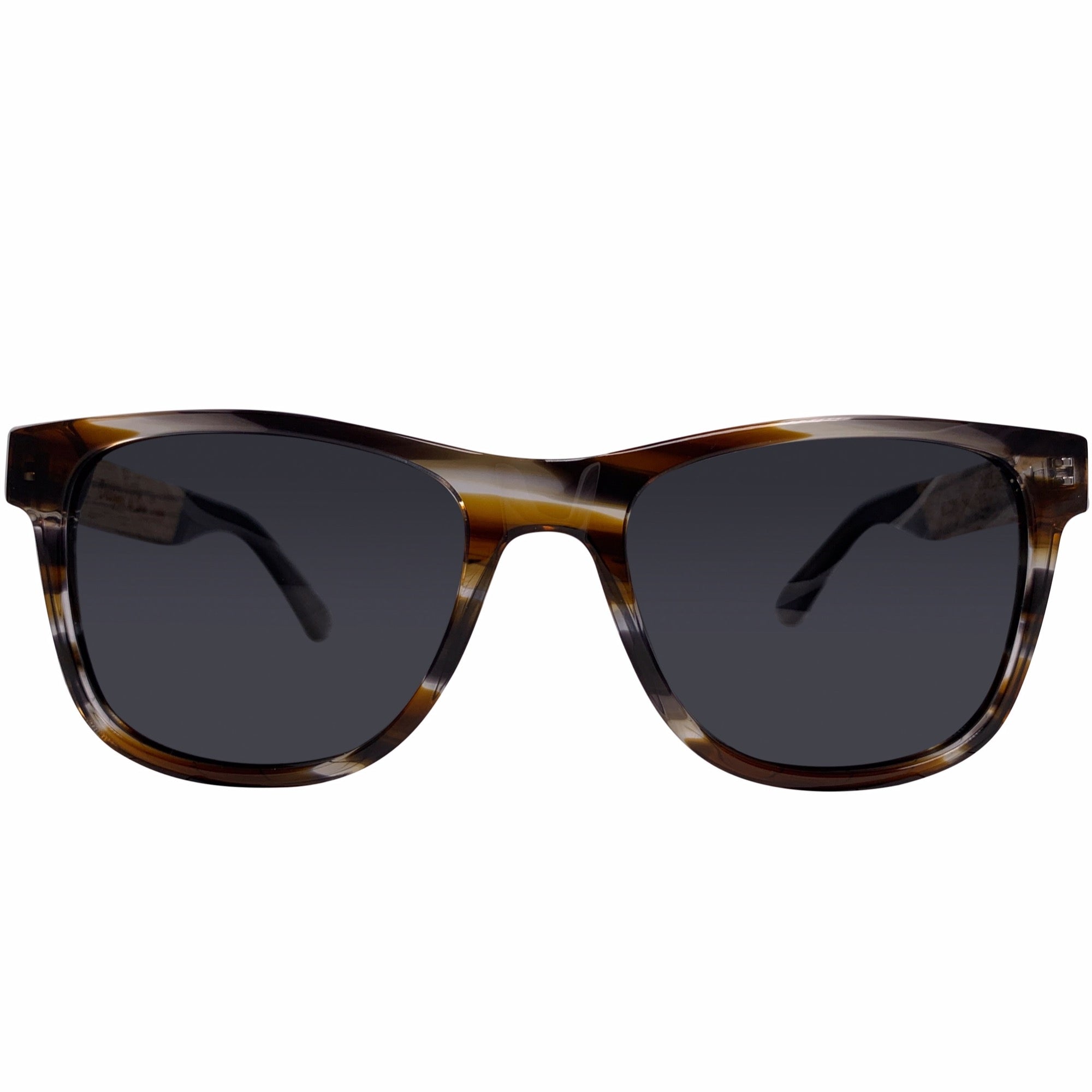
1. Pacific Beach (walnut and ebony). Wayfarer silhouette with stainless hinges and TAC polarized brown lenses. Daily fishing pair. 2. Lake Arrowhead (full bamboo). Lighter weight, comfortable for long days. Brown or gray tint. 3. Mount Whitney (acetate front, walnut temples). Slight wraparound, blocks more side glare. Good for boat fishing. 4. Pyramid Peak (acetate, walnut temples). Mountain-and-river coded, runs slightly deeper for better coverage.
All four ship with TAC polarized UV400 lenses, marine-grade finish, lifetime frame warranty.
The salt water care routine for fishing sunglasses
After every fishing trip in salt water.
1. Rinse in fresh water for 15 to 30 seconds. Both lenses, around the hinges, into the lens groove. 2. Pat dry with the microfiber pouch. 3. Store in a hard case or pouch. Not loose in tackle box, not on dashboard. 4. Inspect for grit in the lens groove. Salt and sand can lodge there over time.
Frames cared for this way last five to ten years of regular fishing use. Frames left to dry with salt residue last one to two.
What about prescription polarized fishing sunglasses
Cali Life Co. does not currently offer prescription lenses. For anglers who need correction, the right approach is either:
- Wear contact lenses with non-prescription polarized sunglasses
- Get a dedicated prescription polarized fishing sunglass from an optical shop
- Use polarized clip-ons over standard prescription glasses (lower quality but functional)
This is one of the few use cases where the dedicated specialty option may be worth the higher price.
When non-polarized makes sense for fishing
Almost never. The few exceptions:
- Pilot anglers who fly to remote fishing locations and need non-polarized in the cockpit (carry both)
- Some commercial fishermen who watch dashboard instruments constantly (less common with modern displays)
- Backup pairs for breakage in remote locations
For 99 percent of fishing scenarios, polarized is correct.
FAQ
Are polarized sunglasses necessary for fishing?
Functionally yes. Fishing without polarization means looking at glare instead of into the water. Once you fish with polarized lenses, you do not go back.
What lens tint is best for fishing?
Amber or copper for most freshwater and mixed light. Brown for versatility. Gray for midday brightness and offshore. Most anglers start with amber.
Are mirrored polarized sunglasses better for fishing?
Marginally, in extremely bright conditions. Mirror coatings reflect a small amount of additional light, which can help in midday glare. Polarized without mirror is fully sufficient.
Are wood sunglasses good for fishing?
Yes, with the right specs. Cali Life Co. polarized wood sunglasses have stainless steel hinges, marine-grade finish, and TAC polarized UV400 lenses, all suited to recreational fishing.
How do I take care of fishing sunglasses?
Rinse in fresh water after every salt-water trip, pat dry with microfiber, store in a hard case or pouch. Avoid leaving in tackle boxes, pockets, or dashboards.
Should I get a strap for my fishing sunglasses?
Yes, especially on boats. A $4 to $10 sport strap from any dive shop prevents loss overboard.
Are Cali Life Co. sunglasses good for saltwater fishing?
Yes. Stainless steel hinges resist corrosion, marine-grade finish handles salt water, TAC polarized UV400 lenses block UV and glare. Use the rinse routine after every trip.
Will the lifetime warranty cover damage from fishing?
The warranty covers structural failures (hinges, glue joints, frame cracks). Loss overboard is not covered, but discounted replacements are available through owner-rewards.
Bottom line
Polarized sunglasses are essential gear for fishing. Amber or copper for most conditions, gray for offshore, stainless steel hinges and marine-grade finish for salt water durability. Cali Life Co. polarized wood sunglasses at $39 deliver the spec without the premium price. Browse the polarized wood sunglasses collection, or read can wood sunglasses go in the ocean for the salt-water care protocol.
Related posts
- Polarized sunglasses driving pros and cons
- Best polarized sunglasses under 50
- Can wood sunglasses go in the ocean
---
Cali Life Co. handcrafts polarized wood sunglasses in San Diego, California. Every pair is backed by a lifetime warranty.
Shop polarized UV400 frames


Polarized UV400 - real wood and bamboo - lifetime warranty - designed in California.