


Are Cali Life Sunglasses UV400 Protected? The Lab-Spec Answer (Cali Life Co.)
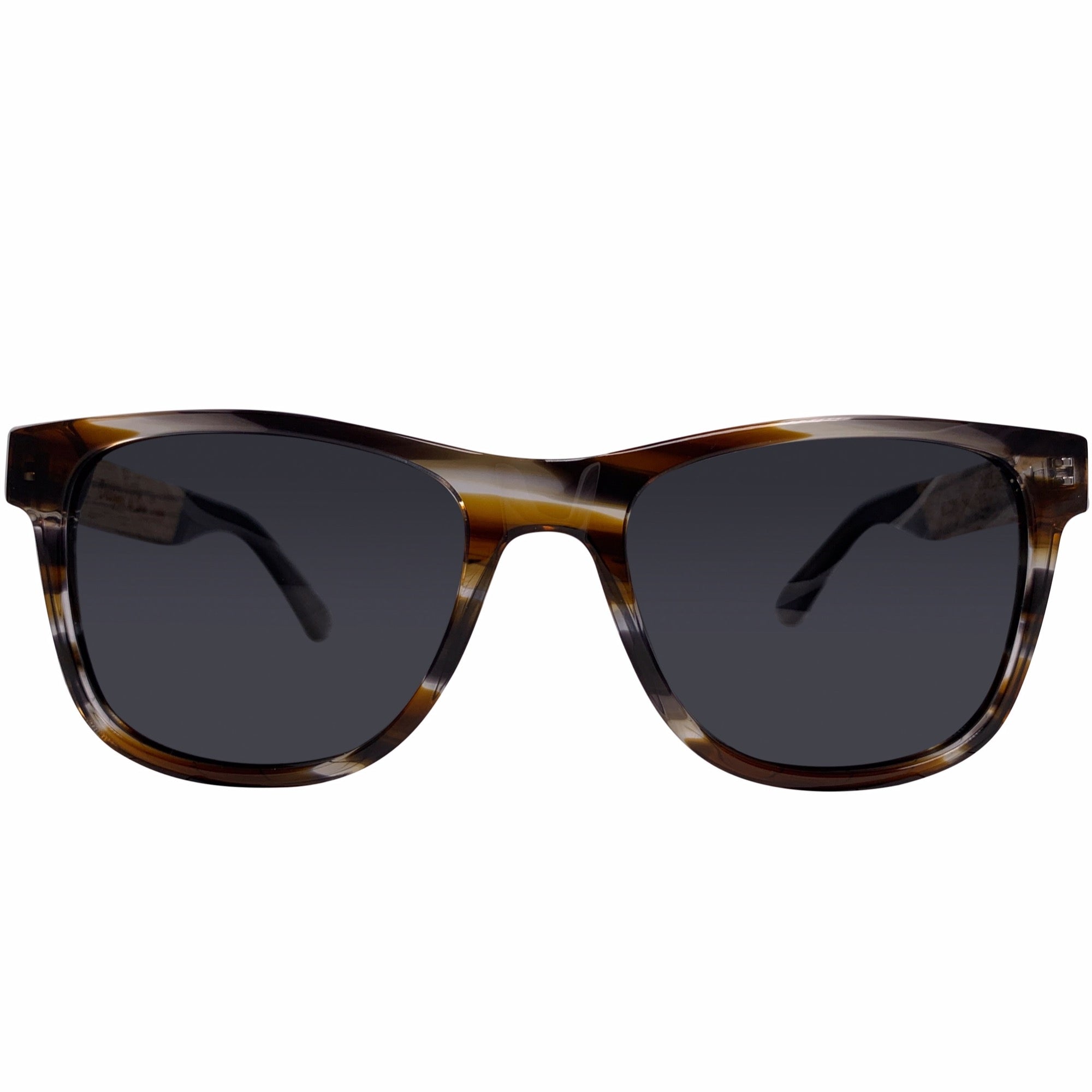
TL;DR: Yes. Every Cali Life Co. sunglass lens is UV400 protected, blocking 100 percent of UVA and UVB rays up to 400 nanometers. UV400 is the gold standard for sunglass UV protection. It exceeds the American Optometric Association's recommendation for full UV blocking, and it covers the entire damaging UV spectrum that reaches the eye. Every frame in the catalog ships with TAC polarized UV400 lenses, regardless of whether the frame is wood, acetate, or combination. The UV400 rating is consistent across the line, from the $39 polarized wood collection to the apparel-bundled gift options.
UV protection is the single most important spec on a sunglass. Here is exactly what UV400 means and why it matters.
What UV400 actually means
UV light is divided into three bands by wavelength.
| Band | Wavelength | What it does | |---|---|---| | UVA | 315 to 400 nm | Penetrates deep into the eye, contributes to long-term damage | | UVB | 280 to 315 nm | Mostly absorbed by the cornea, causes acute damage | | UVC | 100 to 280 nm | Absorbed by ozone, does not reach the surface |
UV400 lenses block all light up to 400 nanometers. That is the full UVA range plus all UVB plus a bit of buffer above. The American Optometric Association publishes UV protection guidelines that explicitly recommend UV400 for daily wear.
Anything labeled "UV protection" without the 400 specification may be blocking only a portion of UVA. UV380, UV375, and "blocks UV" are all weaker claims than UV400.
Why we use UV400 across every frame
Three reasons.
1. It is the safer spec. Full UV protection is a long-term eye-health issue, not a feature to optimize cost on. We made the decision to use UV400 across the line so no customer has to think about it. 2. It pairs naturally with TAC polarized lens construction. TAC lenses are built in five layers (two protective, one polarization film, one UV layer, one hard scratch-resistant coat). Adding UV400 spec to the build is a small marginal cost. 3. It supports the lifetime warranty. A lens that protects 100 percent of UV today will still protect 100 percent of UV at year ten, because the UV layer is built into the lens, not coated on top. A coating-only UV layer can degrade with cleaning.
The UV400 spec is constant across all frames: walnut, bamboo, rosewood, ebony, zebra wood, acetate, and combination styles.
How to verify UV400 on any sunglass
If you are inspecting a sunglass (ours or another brand), three simple checks.
Check 1: the label. Quality sunglass brands label UV400 explicitly on the lens, the frame, or the packaging. "UV protection" without 400 is a weaker claim.
Check 2: the brand documentation. A brand willing to publish exact lens specs (UV400, polarized, lens material, hard-coat) is generally trustworthy. A brand using vague claims ("protective lens," "premium UV blocking") often is not.
Check 3: an optometrist test. If you have a pair of unknown lenses, any optometrist can test them with a UV photometer in 30 seconds. Most do this for free.
For Cali Life Co. frames, the UV400 spec is published on every product page and stamped on the inner temple of every frame.
What UV400 does not cover
A few things UV400 lenses are not.
Not the same as polarized. UV400 blocks UV light. Polarization eliminates glare. They are separate features. Cali Life Co. lenses include both, but in the broader market a lens can be UV400 without being polarized, or polarized without being UV400.
Not a guarantee of impact resistance. UV400 specifies UV blocking, not lens toughness. TAC polarized lenses on Cali Life Co. frames carry their own impact resistance from the multi-layer construction, but UV400 itself does not certify impact safety.
Not the same as blue-light blocking. Some sunglasses block visible blue light in addition to UV. Standard UV400 lenses do not, but a UV400 lens can also be tinted to reduce blue light.
The full polarized vs UV400 breakdown lives at difference between UV400 and polarized.
Why UV protection matters even on cloudy days
UV light passes through clouds. The American Optometric Association reports up to 80 percent of UV reaches the surface even on overcast days. Sand, water, snow, and concrete all reflect additional UV upward, which is why sunglasses are a year-round consideration in California.
Long-term UV exposure to the eye is associated with cataracts, macular degeneration, and pterygium (a benign growth on the conjunctiva). UV400 sunglasses are the simplest, lowest-friction way to reduce that long-term exposure.
The lens spec on every Cali Life Co. frame
What ships in every order.
- TAC polarized UV400 lens with five-layer construction
- 100 percent UVA and UVB protection up to 400 nanometers
- Polarized film that eliminates horizontal glare
- Hard scratch-resistant top coat for daily wear durability
- Stainless steel spring hinges corrosion-resistant in salt water
- Marine-grade frame finish moisture and UV resistant
- Microfiber pouch included with every order
- Lifetime frame warranty covering structural failures
The UV400 spec is identical across the catalog. The only thing that changes between frames is the wood species, the silhouette, and the lens tint.
Lens tints and UV400
Cali Life Co. offers a range of lens tints (gray, brown, mirrored gold, mirrored pink, mirrored blue) across the catalog. Every tint is built on a UV400 base. The tint changes the visible-light transmission and aesthetic, not the UV protection.
| Lens tint | Visible light transmission | UV protection | |---|---|---| | Gray | ~15% | UV400 | | Brown | ~18% | UV400 | | Gold mirror | ~12% | UV400 | | Pink mirror | ~14% | UV400 | | Blue mirror | ~13% | UV400 |
All five tints carry the same UV400 spec. Choose tint based on aesthetic and intended use, not UV.
FAQ
Are Cali Life sunglasses UV400 protected?
Yes. Every lens in the catalog is UV400, blocking 100 percent of UVA and UVB rays up to 400 nanometers.
What does UV400 actually mean?
UV400 lenses block all light up to 400 nanometers, which covers the full UVA range plus all of UVB. It is the strongest commonly-available UV rating for sunglasses.
Is UV400 the same as polarized?
No. UV400 blocks UV light, polarization eliminates glare. They are separate features. Cali Life Co. lenses include both.
How can I verify UV400 on my sunglasses?
Check the lens spec on the product page or the frame stamp. For unknown sunglasses, any optometrist can test the UV protection in 30 seconds with a UV photometer.
Do mirrored lenses provide better UV protection than tinted?
No. UV protection comes from the lens construction, not the tint. Both mirrored and tinted Cali Life Co. lenses carry the same UV400 spec.
Does UV400 protection wear off over time?
On Cali Life Co. lenses, no. The UV layer is built into the lens construction, not applied as a coating. Lifetime UV400 protection is consistent for the life of the lens.
Are there sunglasses with stronger UV protection than UV400?
Some specialty lenses go to UV415 or UV420 for marginal additional blue-light blocking. For sunglass purposes, UV400 covers the damaging UV spectrum completely.
Are Cali Life Co. sunglasses safe for outdoor sports and beach use?
Yes. UV400 is the right spec for full-day outdoor exposure including beach, surf, hiking, driving, and snow sport.
Bottom line
Every Cali Life Co. sunglass is UV400 protected. Every wood frame, every acetate frame, every combination style. The UV400 spec is consistent across the catalog, paired with polarization, hard scratch coat, and the lifetime frame warranty. Browse the polarized wood sunglasses collection, or read difference between UV400 and polarized to understand how the two protections work together.
Related posts
- Difference between UV400 and polarized
- How to test if sunglasses are actually polarized
- Complete guide to eco friendly sunglasses 2026
---
Cali Life Co. handcrafts polarized wood sunglasses in San Diego, California. Every pair is backed by a lifetime warranty.
Shop polarized UV400 frames


Polarized UV400 - real wood and bamboo - lifetime warranty - designed in California.