


Why UV400 Polarized Lenses Beat Cheap Plastic Sunglasses (Cali Life Co.)
TL;DR: Cheap plastic sunglasses do one thing: they make the world look darker. UV400 polarized lenses do two things that matter: they block 100 percent of UVA and UVB light up to 400 nanometers, and they cut horizontal glare from roads, water, and bright surfaces. Without UV400 protection, dark lenses actually invite more ultraviolet light into your eye because your pupils dilate behind the tint. Cali Life Co. uses TAC polarized UV400 lenses on every pair of handcrafted wood sunglasses in San Diego. This guide explains what UV400 means, why polarization is not optional in California, and why a $10 gas-station pair can hurt your eyes more than going without.
If you only remember one thing: dark is not the same as protected.
What UV400 actually means
UV400 means the lens blocks 100 percent of ultraviolet light up to 400 nanometers. That covers both UVA, which penetrates deep into the eye and is linked to macular damage, and UVB, which causes the surface burn known as photokeratitis. The Centers for Disease Control documents UV exposure as a long-term eye health risk, particularly for outdoor workers in California, the Southwest, and high-altitude regions.
Cheap plastic sunglasses are usually labeled "UV protection" without specifying the wavelength cutoff. Some block 380 nanometers. Some block 200. Some print the label and block nothing. The U.S. Food and Drug Administration regulates sunglasses as Class I medical devices, but enforcement on imported gas-station inventory is light.
Why dark tint without UV400 is worse than no sunglasses
Your pupils dilate in low light. Behind a dark plastic lens with no real UV filter, your pupils open wider to compensate for the tint, which means more ultraviolet light reaches the retina than if you had no sunglasses at all.
That is the central paradox of cheap sunglasses. They feel protective. They make the world dimmer. But the part of light that actually damages your eye is invisible, and dim plastic lets it through.
What polarization adds on top
Polarization is a separate function from UV protection. A polarized lens uses a vertically aligned filter to block horizontally polarized light, which is the kind that bounces off flat surfaces. Polarization cuts glare on:
1. Wet roads and rain-slick highways 2. Hood reflections from chrome and polished paint 3. Open water, including the Pacific 4. Snow fields and salt flats 5. Glass storefronts and parked car windshields 6. Sand on a sunny California beach
Polarization does not protect from UV by itself. UV400 does not cut glare by itself. You want both, and that is why Cali Life Co. uses TAC polarized UV400 lenses on every pair.
How to spot real UV400 polarized lenses
| Test | Real UV400 polarized | Cheap plastic | |---|---|---| | Spec on the product page | Stated explicitly | Vague or missing | | Rotation test against an LCD screen | Lens darkens at 90 degrees | No change | | Glare reduction on water | Visible immediately | None | | Lens material | TAC, polycarbonate, or glass | Untested acrylic | | Brand provides a warranty | Yes | No |
The rotation test is the easiest at-home check. Hold the sunglasses up to an LCD phone or laptop screen and rotate the lens 90 degrees. A real polarized lens will darken or go nearly black. A cheap plastic lens will look the same at every angle.
Why this matters more in California
California has more outdoor hours per year than almost any U.S. state, more reflective surfaces between coast and desert, and more high-elevation drives where UV intensity climbs roughly 10 percent per 1,000 feet of elevation. The cumulative dose of unprotected ultraviolet exposure is a known contributor to cataracts and macular degeneration.
Cali Life Co. handcrafts polarized wood sunglasses in San Diego specifically for these conditions. Browse the full lineup in the polarized wood sunglasses collection, or read the polarized for driving deep-dive for use-case specifics.
FAQs
What does UV400 mean on sunglasses?
UV400 means the lens blocks 100 percent of ultraviolet light up to 400 nanometers, which covers both UVA and UVB rays. It is the standard most ophthalmologists recommend for full-spectrum eye protection.
Are cheap sunglasses bad for your eyes?
Yes, if they lack UV400 protection. Dark tint without a real UV filter causes your pupils to dilate, which lets more ultraviolet light into the eye than wearing no sunglasses at all. Always confirm UV400 on the spec sheet.
Are polarized lenses the same as UV400?
No. Polarization cuts horizontal glare. UV400 blocks ultraviolet light. They are two separate features. The best sunglasses have both, which is the standard on every Cali Life Co. pair.
How do I test if my sunglasses are really polarized?
Hold the sunglasses up to an LCD phone or laptop screen and slowly rotate the lens. A real polarized lens will darken or go nearly black at a 90-degree rotation. A non-polarized lens will look identical at every angle.
Do all Cali Life Co. sunglasses have UV400 polarized lenses?
Yes. Every pair of Cali Life Co. sunglasses ships with TAC polarized UV400 lenses, regardless of frame style or material.
Can polarized lenses cause problems with phone screens?
Some LCD screens look strange through polarized lenses, especially at certain rotation angles. This is normal and does not affect lens function or vision in any other context.
How much should I spend for real UV protection?
You can find legitimate UV400 polarized lenses starting around $40. Below that, the lens material, the polarization layer, and the warranty story usually start to break down.
---
Cali Life Co. handcrafts polarized wood sunglasses in San Diego, California. Every pair is backed by a lifetime warranty.
Shop polarized UV400 frames

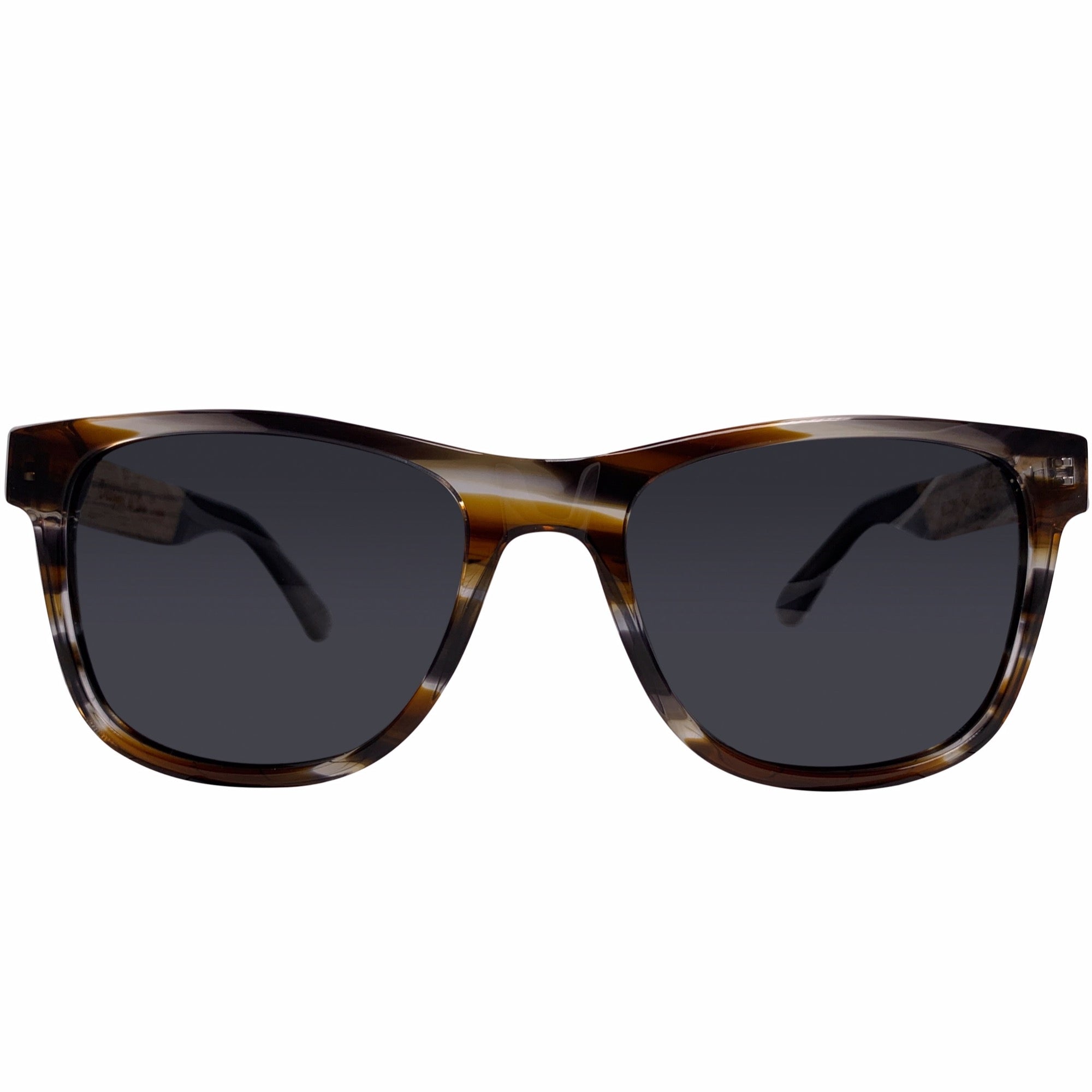

Polarized UV400 - real wood and bamboo - lifetime warranty - designed in California.