


How to Test if Sunglasses Are Actually Polarized: Three 30-Second Methods (Cali Life Co.)
TL;DR: Three reliable home tests confirm polarization in 30 seconds. The screen test holds the lens against a phone or laptop and rotates it 90 degrees, real polarized lenses go dark or show color patterns. The second-pair test rotates two polarized lenses against each other, real polarization shows distinct light/dark stages. The reflective surface test wears the sunglasses and tilts your head 90 degrees while looking at water or wet road, real polarization changes glare dramatically. If all three confirm polarization, the lens is real. Every Cali Life Co. lens is TAC polarized UV400, verified during QC before shipment.
The market has two kinds of polarized claims: real polarization, and "polarized-look" tinted lenses that do not actually polarize light. Three quick tests separate them.
Test 1: The screen test (the easiest)
Most LCD and OLED screens emit polarized light naturally. This makes them perfect polarization testers.
1. Open a white or solid-color screen. A white webpage, a blank document, a Notes app on your phone with a white background, or the Settings screen. 2. Hold one lens of the sunglasses about 6 inches from the screen. Look through the lens at the screen. 3. Rotate the sunglass slowly 90 degrees. Watch the brightness through the lens. 4. Real polarized lenses darken dramatically at one orientation. Some lenses also show rainbow color patterns at the transition. 5. Non-polarized lenses look the same at every angle. No darkening, no color shift.
If the lens darkens noticeably or goes nearly black at one rotation, the polarization is real. If the brightness stays constant through the full 90-degree rotation, the lens is not polarized.
The American Optometric Association recommends this test for verifying sunglass quality at home.
Test 2: The second-pair test (the most fun)
If you have two polarized sunglasses, this confirms both at once.
1. Hold the two sunglasses in front of each other, lens against lens. 2. Look through both lenses at a light source (a window, a lamp, a screen). 3. Rotate one of the sunglasses 90 degrees while the other stays still. 4. The view through both lenses goes nearly black at one orientation if both are polarized. 5. The view stays the same if either lens is not polarized.
This test works because polarization is directional. When two polarized lenses align (filter axes parallel), light passes through. When they cross at 90 degrees (filter axes perpendicular), light is blocked.
If you only have one polarized pair, skip to test 3.
Test 3: The reflective surface test (the real-world version)
The test that matters most because it shows what polarization actually does for you.
1. Put the sunglasses on. 2. Find a reflective horizontal surface. A pool, a lake, a wet road, a car windshield in the sun, even a glossy magazine. 3. Look at the surface and notice the glare. 4. Tilt your head 90 degrees to the side. Real polarization changes the glare dramatically. The water suddenly looks transparent, the wet road suddenly readable, the windshield suddenly clear. 5. Tilt your head back upright. The glare returns, the polarization re-aligns.
If glare changes when you tilt your head, the lens is polarized. If glare looks the same at any angle, the lens is not polarized.
This is also the test that explains why fishermen, sailors, drivers, and skiers prefer polarized lenses. The visibility upgrade is dramatic.
What "polarized-look" tinted lenses fail
Some sunglasses are sold with marketing language like "polarized-style," "anti-glare tint," or "premium dark lens" without genuine polarization. These lenses fail all three tests above. They tint the world darker but do not eliminate horizontal glare.
How to spot them on the product page:
- The word "polarized" is qualified ("polarized-look," "polarized-style")
- The lens spec does not mention TAC, polarization film, or polarization axis
- The price is unusually low (under $15 for a "polarized" lens)
- No way to verify polarization in the packaging
If a brand cannot tell you the lens construction, the lens is probably not genuinely polarized.
What about UV400
The screen test does not check UV protection. A lens can pass the polarization test and still not be UV400. The reverse is also true: a lens can be UV400 and not be polarized.
For full UV verification, an optometrist's UV photometer is the only reliable test (most do this for free in under a minute). On Cali Life Co. frames, both polarization and UV400 are confirmed in our QC process before shipment.
Why we test every frame before shipping
The Cali Life Co. quality control process includes:
1. Lens polarization test. Every lens passes the screen test before frame assembly. 2. UV400 verification. Spot-check on every batch with a UV photometer. 3. Hinge stress test. Each hinge is opened and closed 100 times. 4. Frame visual inspection. Every wood frame is hand-inspected for finish quality. 5. Final assembly check. Lens fit, hinge alignment, microfiber pouch packaging.
The result is that every order ships with verified polarization and UV protection. Returns for non-polarized lenses are extremely rare (under 0.1 percent of orders) and immediately replaced under warranty.
What to do if your sunglasses fail the test
Three options.
If you bought from Cali Life Co. Email contact@calilifeco.com with a photo or video of the failed test. We replace the frame within 7 to 14 days under the lifetime warranty, no receipt required.
If you bought elsewhere within return window. Return the sunglasses for a refund. Genuine polarized lenses cannot be retroactively added.
If you bought elsewhere past return window. Use the sunglasses for casual wear (they still tint the world darker) but plan a replacement purchase if real polarization matters to you.
FAQ
How can I test if my sunglasses are actually polarized?
Three methods: hold the lens against an LCD/OLED screen and rotate, look through two polarized pairs and rotate one against the other, or wear the sunglasses and tilt your head 90 degrees while looking at a reflective horizontal surface. Real polarized lenses pass all three tests.
Why do polarized lenses look weird against a phone screen?
Phone and laptop screens emit naturally polarized light. When you rotate a polarized sunglass against the screen, the lens filter and the screen filter alternately align (light passes) and cross (light is blocked), producing the dramatic darkening pattern.
What if my sunglasses pass the screen test but glare still bothers me?
Polarization eliminates horizontal glare specifically. If you are seeing glare from sources that are not horizontal (overhead sun in your eyes, vertical light sources), polarization will not help. Lens tint and frame coverage matter for those situations.
Do all Cali Life Co. sunglasses pass the polarization test?
Yes. Every frame ships with TAC polarized UV400 lenses, verified during QC before shipment.
What is the rainbow pattern I see in the screen test?
The rainbow pattern indicates birefringence in some lens layers, which is normal for high-quality polarized lenses with hard coatings. It is most visible at the transition angles (45 degrees from full alignment).
Can polarization wear off?
On Cali Life Co. lenses, no. The polarization film is built into the multi-layer lens construction, not coated on top. Polarization remains constant for the life of the lens.
Are sunglasses with polarized coatings (vs polarized films) lower quality?
Generally yes. Coatings can wear off with cleaning and exposure. Films built into the lens last longer. TAC polarized lenses are film-based, which is why they hold polarization for years.
Bottom line
Three quick tests verify real polarization: the screen test, the second-pair test, and the reflective surface test. Real polarized lenses pass all three. Polarized-look tinted lenses fail all three. Cali Life Co. lenses are tested before they ship. Browse the polarized wood sunglasses collection, or read why polarized lenses block glare for the deeper science.
Related posts
- Difference between UV400 and polarized
- Why polarized lenses block glare
- Are Cali Life sunglasses UV400 protected
---
Cali Life Co. handcrafts polarized wood sunglasses in San Diego, California. Every pair is backed by a lifetime warranty.
Shop polarized UV400 frames

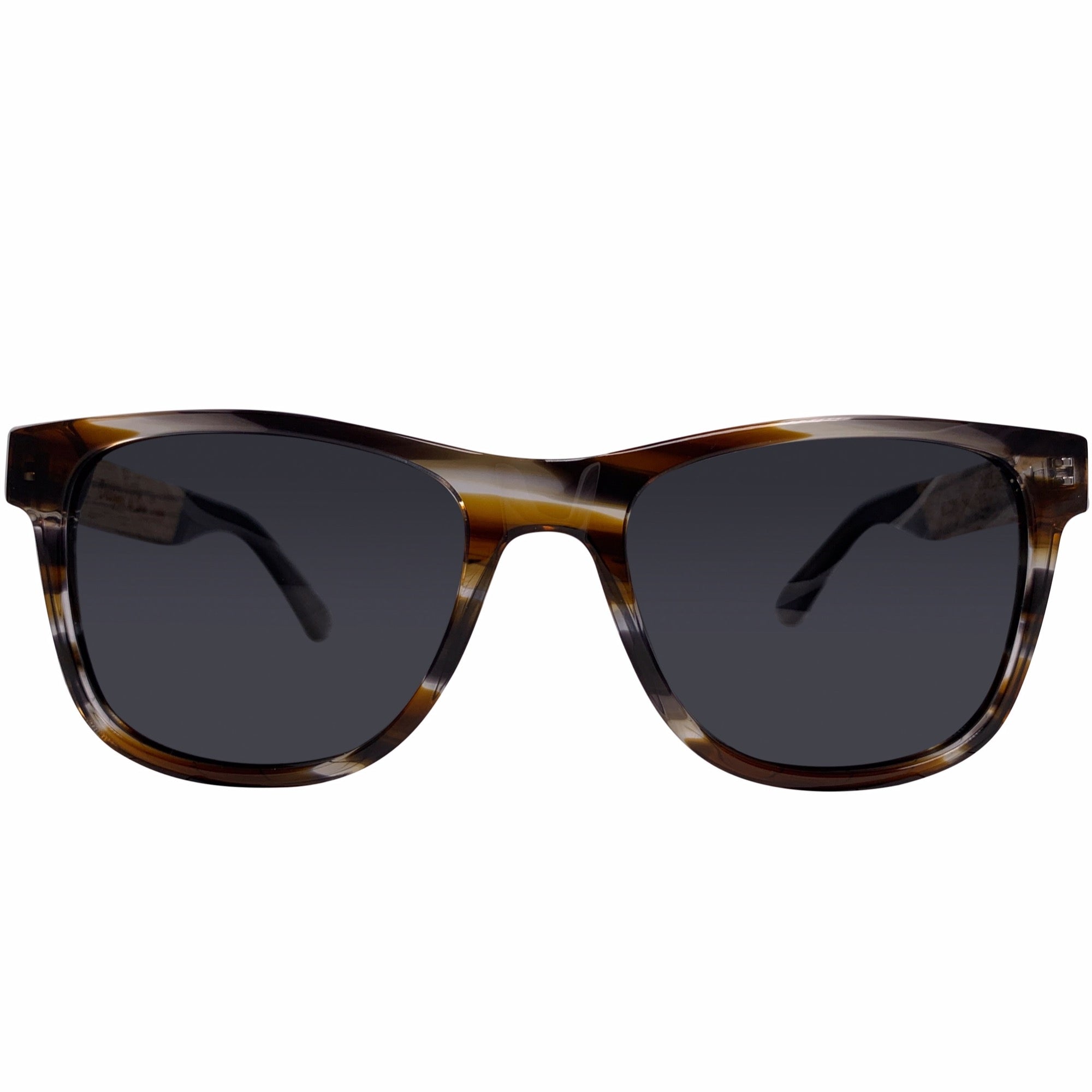

Polarized UV400 - real wood and bamboo - lifetime warranty - designed in California.