


How to Clean Polarized Lenses Without Scratching: The 60-Second Routine (Cali Life Co.)
TL;DR: The safe routine is cool water plus a clean microfiber cloth. That is the entire method. Avoid paper towels, tissues, and shirt fabric. Avoid alcohol, ammonia, acetone, and any "glass cleaner" sprays. The most common cause of scratched polarized lenses is wiping with the wrong cloth, not scratching from external impact. Quality polarized lenses (TAC construction with hard coat) hold up well to cleaning when you use the right tools. Cali Life Co. ships every pair with a microfiber pouch designed to function as both cleaner and storage case. Sixty seconds, three steps, and the lens stays clear for the life of the frame.
The cleaning question separates lenses that look new at year five from lenses that look hazy at year one. The right routine is short and the wrong routine is everywhere.
The 60-second clean
The only routine you need.
1. Rinse the lens under cool running water for 10 seconds. Both sides of both lenses, around the frame, into the lens groove. Cool water, never hot. 2. Shake off excess water gently. No flicking. The hinges last longer with gentle handling. 3. Pat the lens dry with the microfiber pouch. Both sides, edge to edge. 4. Polish in light circles. Quarter-coin-sized circular motions, light pressure. 5. Inspect. A clean lens shows no streaks, no smudges, and crystal-clear visibility.
The American Optometric Association recommends this method for sunglass cleaning.
Why water first matters
The most common cleaning mistake is wiping a dry lens. Even a lens that looks clean usually has fine grit (pollen, dust, salt, sand) on the surface. Wiping that grit with any cloth grinds it into the lens coating.
A 10-second water rinse flushes the grit away. The cloth then polishes a clean lens, not a gritty one. This single step prevents most cleaning-related scratches.
What never to use
The list of things that damage polarized lenses, ranked by frequency of damage we see in warranty claims.
| What | What it damages | Why | |---|---|---| | Paper towels | Hard coat, polarization film | Wood fibers act like fine sandpaper | | Facial tissues | Hard coat | Similar to paper towels, plus binders | | Shirt corners | Hard coat | Cotton picks up grit, grinds it in | | Glass cleaner with ammonia | Polarization film, hard coat | Ammonia strips coatings | | Isopropyl alcohol | Polarization film | Dissolves film over repeated exposure | | Acetone (nail polish remover) | All lens layers | Dissolves plastic | | WD-40 | Lens and frame | Solvent base damages plastics | | Hot water | Lens layers, polarization | Heat shock can delaminate layers | | Dishwasher | Everything | Heat plus detergent destroys lenses and coatings |
If a label says "for plastic," "ammonia-based," "alcohol," "for glass," or "industrial," do not use it on a polarized lens.
What to use for stubborn smudges
For sunscreen residue, ocean salt, or stuck-on debris that water alone does not lift, use this method weekly at most.
1. Mix one drop of mild dish soap (Dawn or similar) into a small bowl of cool water. 2. Dip a clean microfiber cloth, wring nearly dry. 3. Wipe the lens in slow, light strokes, both sides. No scrubbing. 4. Rinse the lens in cool clean water for 15 seconds to remove all soap. 5. Pat dry with a fresh microfiber cloth.
Use this only when the daily routine is not enough. Most owners need it once or twice a year, after heavy beach days.
Microfiber care
Your microfiber cloth matters as much as your routine. A dirty microfiber cloth is the same as a paper towel.
Wash the microfiber once a month.
- Cold water, regular detergent, no fabric softener (softener clogs the fibers)
- Air dry or low tumble
- Store separately from regular laundry to avoid lint
Replace the microfiber every year or two.
Even with care, microfiber fibers wear over time. A new pouch is part of every Cali Life Co. order, and replacement pouches are available through the support team.
Use the right side.
The Cali Life Co. microfiber pouch has a smooth interior side and a slightly textured exterior. Use the smooth interior for lens cleaning. The exterior is for frame wiping and storage.
What to do if your lens already has a scratch
A scratch on a polarized lens cannot be polished out the way a wood frame scratch can. The lens layers are too thin and too specialized.
The options:
1. Live with it. Light scratches in your peripheral vision are often unnoticeable in actual wear. 2. Replace the lens. Some optical shops offer lens replacement, though prices may exceed the original frame cost. 3. Replace the frame. For Cali Life Co. customers, the lifetime warranty covers structural failures but not cosmetic lens damage. Owner-rewards pricing offers discounted replacements for scratched lenses.
The fix is prevention, not repair. The cleaning routine above prevents most scratches.
What about cleaning sprays sold for sunglasses
Some sprays marketed specifically for sunglasses (Carl Zeiss, ZEISS, OptiPlus, etc.) are formulated for plastic lenses including polarized. These are usually safe, but read the label.
Things to avoid in sunglass cleaning sprays:
- Ammonia (ingredient list)
- Alcohol or isopropyl alcohol (ingredient list)
- "For glass" branding (these often have ammonia)
Things that are usually safe:
- Sprays specifically for "plastic" or "polymer" lenses
- Formulations with mild surfactants
- Sprays sold in optical shops alongside microfiber cloths
For Cali Life Co. lenses, plain water plus microfiber works for 99 percent of cleaning. Sprays are unnecessary.
Storage between cleanings
The clean stays clean if storage is right.
- Frame in case or pouch when off your face
- Case in shaded ventilated indoor spot
- Never on dashboards (heat plus salt residue)
- Never face-down on hard surfaces (lens against grit)
- Never in tackle boxes, pockets with keys, or beach bags in direct sun
Storage discipline prevents 80 percent of damage. Cleaning discipline prevents the rest.
FAQ
What is the safest way to clean polarized sunglasses?
Rinse with cool water for 10 seconds, then dry and polish with the microfiber pouch. This handles 95 percent of cleaning needs.
Can I use Windex on polarized lenses?
No. Ammonia in glass cleaners strips the polarization film and damages the hard coat. Use cool water and microfiber instead.
Can I use alcohol or hand sanitizer on polarized lenses?
No. Isopropyl alcohol dissolves polarization films and lens coatings over repeated use. Damage is cumulative and visible within weeks of regular exposure.
How often should I clean my polarized sunglasses?
A 60-second water and microfiber pass after every beach day, every long drive, or any time the lens looks smudgy. A deeper soap-and-water clean once a quarter for most wearers.
Why are paper towels bad for polarized lenses?
Paper towels contain wood fibers that act like fine sandpaper. Even a single wipe can leave micro-scratches in the hard coat that compound over time.
Will hot water damage polarized lenses?
Yes, with sustained exposure. Heat shock can delaminate the lens layers. Always use cool or lukewarm water.
My lens is smudgy after wiping, what am I doing wrong?
Usually the cloth picked up grit on a previous wipe. Wash the microfiber cloth once a month, dedicate it to eyewear only, and use the smooth side for lens cleaning.
Are pre-moistened lens wipes safe?
Some are, some are not. Look for "for plastic lenses" or "for sunglasses" specifically. Avoid wipes formulated for glass screens, which often contain alcohol.
Bottom line
Cool water, microfiber pouch, light circles. Skip paper towels, shirts, alcohol, ammonia, and anything labeled "for glass." Sixty seconds. Done. Cali Life Co. ships the right tool with every order. Browse the polarized wood sunglasses collection, or read how to clean wood sunglasses for the companion frame-care routine.
Related posts
---
Cali Life Co. handcrafts polarized wood sunglasses in San Diego, California. Every pair is backed by a lifetime warranty.
Shop polarized UV400 frames

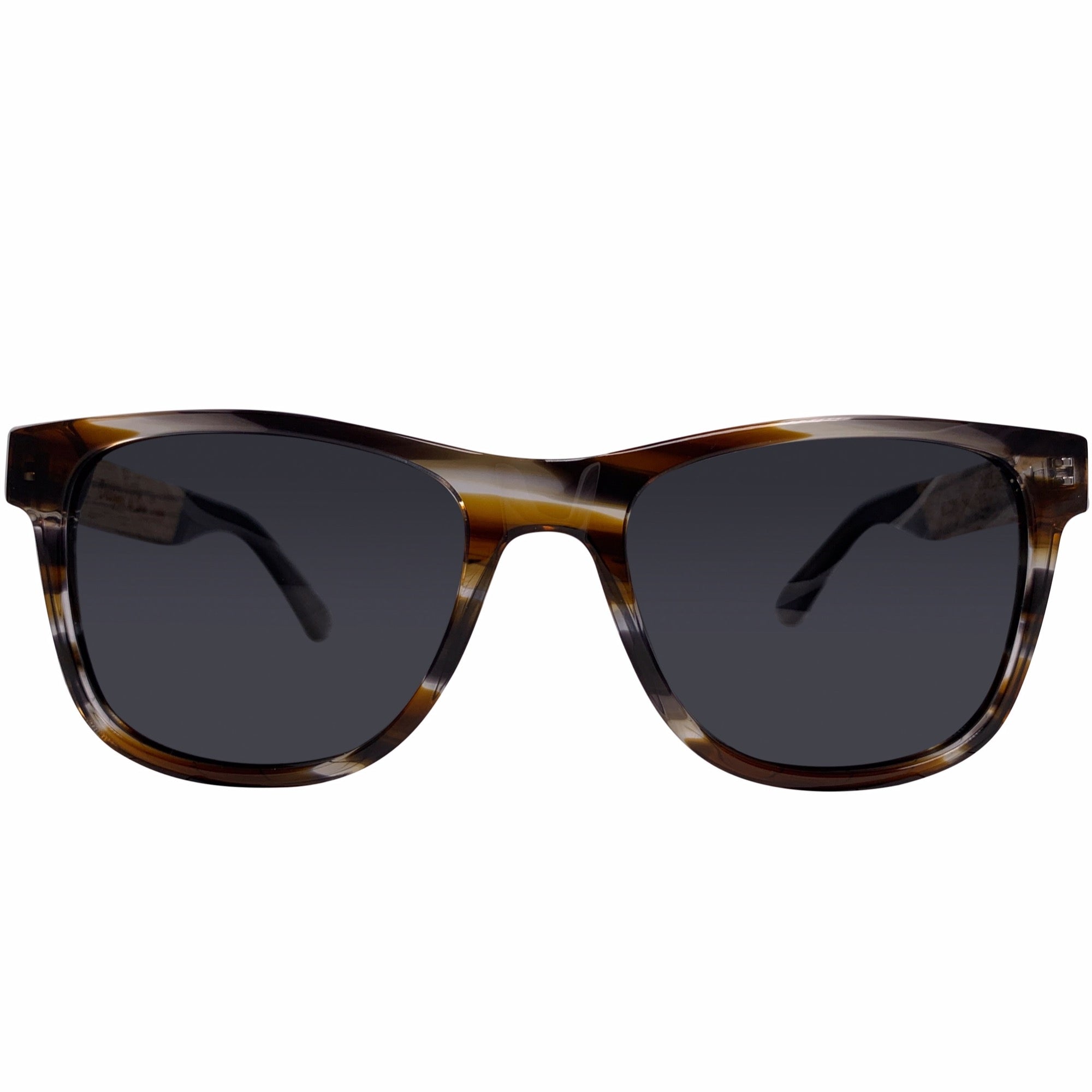

Polarized UV400 - real wood and bamboo - lifetime warranty - designed in California.